The Phosphate Market Has Changed: It’s No Longer Just About Rock
For years, phosphate buyers focused primarily on one question:
Can we secure phosphate rock?
In 2026, that question is no longer enough.
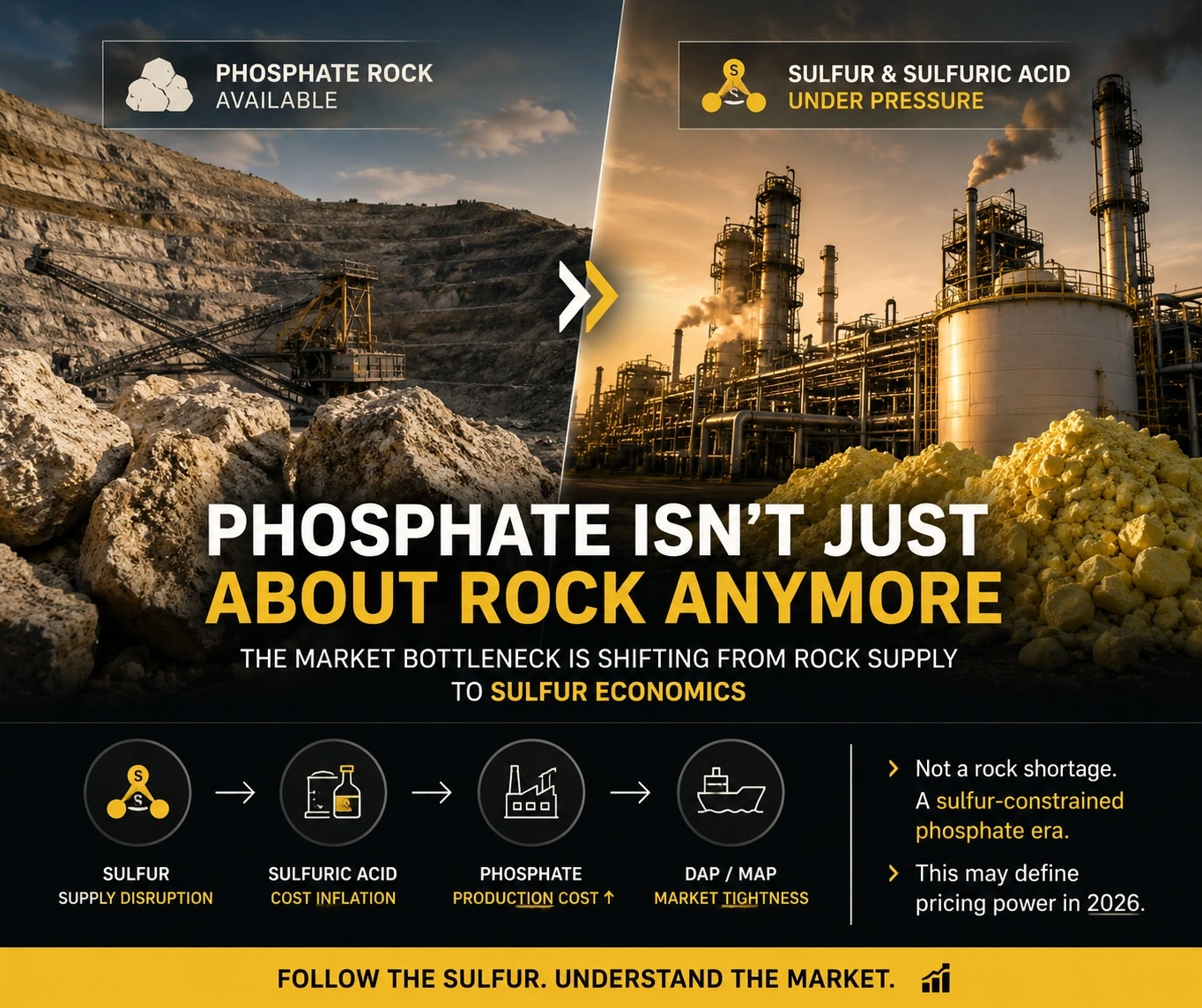
The market has entered a new phase where sulfur availability, sulfuric acid costs, and downstream processing economics are becoming just as critical as phosphate rock itself.
In simple terms:
Owning or accessing phosphate rock does not automatically guarantee competitive phosphate products anymore.
The real competitive edge now lies in the ability to convert phosphate efficiently and economically.
Why Phosphate Prices Remain Structurally Strong in 2026
1) Sulfur Is Becoming the Real Bottleneck
Phosphate fertilizers such as:
- DAP (Diammonium Phosphate)
- MAP (Monoammonium Phosphate)
- TSP (Triple Superphosphate)
- SSP (Single Superphosphate)
- Phosphoric Acid
all depend heavily on sulfur and sulfuric acid.
When sulfur costs rise:
- Production costs increase
- Margins tighten
- Producers reduce economically viable output
- Global phosphate supply becomes structurally tighter
This means the market is increasingly shaped not just by mineral reserves, but by processing economics.
Phosphate Rock vs. Processed Phosphate: The Critical Difference
Many buyers still assume phosphate availability equals market security.
That assumption can be costly.
The real question is:
Can suppliers process phosphate competitively enough to deliver consistent downstream products?
This distinction matters because:
Cheap phosphate rock without secure conversion capacity can create supply instability. Strategic sourcing from integrated suppliers creates long-term competitive advantage.
Why Supplier Selection Matters More Than Ever
In today’s phosphate environment, buyers are no longer simply searching for the lowest price.
They are prioritizing:
Reliability + Cost Stability + Product Quality + Supply Security
A professional phosphate rok supplier should provide:
Key Advantages:
- Consistent P2O5 quality
- Reliable global logistics
- Competitive export pricing
- Transparent contracts
- Flexible spot and long-term supply solutions
- Market intelligence, not just product
2026 Buying Opportunity: Why Strategic Buyers Can Win Big
With Sulfur market volatility, Higher sulfuric acid costs, Geopolitical disruptions, Chinese export restrictions, and tightening processed phosphate markets, buyers who secure the right supply partnerships now may gain:
- Lower long-term procurement costs
- Reduced exposure to price spikes
- Stronger domestic resale margins
- Better supply continuity
Our Role: More Than a Phosphate Rock Supplier
We are not simply a phosphate rock supplier. We help buyers build stronger phosphate procurement strategies.
Our Product Portfolio:
- Phosphate Rock
- DAP
- MAP
- TSP
- SSP
- Phosphoric Acid
Why Buyers Choose Us:
- Competitive international pricing
- Trusted sourcing channels
- Export expertise
- Flexible logistics
- Strategic market insights
- Reliable supply planning
In the New Phosphate Era, Market Intelligence Creates Profit
The biggest winners in 2026 may not be those who buy cheapet, They may be those who buy smartest.
As phosphate markets shift from rock supply narratives to sulfur-constrained processing economics, strategic procurement becomes a major profit driver.
Final Thought: The Future of Phosphate Belongs to Informed Buyers
The phosphate market is evolving from a traditional commodity story into a supply-chain intelligence game. The key question is no longer:
Who has phosphate rock?
The real question is:
Who can be a phosphate rock supplier reliably, competitively, and sustainably?
If your business is looking to source:
- Phosphate Rock
- DAP
- MAP
- TSP
- SSP
This may be the time to secure smarter partnerships before the next pricing cycle intensifies.
Strategic Supply Insight
Understanding why raw phosphate rock alone cannot guarantee low-cost fertilizer production is critical for modern agricultural procurement. At Mofid Ltd., we analyze the complete downstream supply chain—from sulfur and ammonia inputs to maritime freight constraints—to secure the most efficient product formulations for our global partners.
Frequently Asked Questions (FAQ)
-
Why is raw phosphate rock no longer enough to determine fertilizer costs? Because downstream factors like sulfur prices, global processing capacities, and severe maritime shipping disruptions have a larger impact on final fertilizer pricing than the raw ore itself.
-
What is the real pricing bottleneck in the phosphate value chain? Phosphoric acid production and regional processing availability often act as the primary bottlenecks, altering finished fertilizer costs even when rock prices are stable.
-
How does Mofid Ltd. assist buyers facing these supply chain challenges? We offer deep market analysis, direct sourcing from strategic origins (Egypt, Jordan, Syria), and structured logistics planning to minimize downstream price risks.
What Is Phosphate Rock?
Phosphate rock is a naturally occurring mineral containing significant concentrations of phosphorus pentoxide (P₂O₅). It is the primary raw material used to produce phosphate fertilizers and various chemical products.
Most phosphate rock is extracted from sedimentary deposits and comes in different grades such as 26%, 28%, 30% P₂O₅, and higher.
Geochemically, phosphate rock is rich in apatite minerals and may contain calcium, magnesium, iron, and trace elements. Its purity directly affects the efficiency of chemical processing and fertilizer production—making source selection critically important.
Applications of Phosphate Rock
Phosphate rock is used across several major industries:
1. Fertilizer Production
Over 80% of the world’s phosphate rock is used to produce fertilizers such as:
- DAP (Diammonium Phosphate)
- MAP (Monoammonium Phosphate)
- TSP (Triple Superphosphate)
These fertilizers are essential for improving soil fertility and crop yields.
2. Phosphoric Acid Production
Phosphate rock is the main feedstock for producing both industrial-grade and food-grade phosphoric acid, which is a key building block in numerous chemical and pharmaceutical products.
3. Industrial and Food Applications
Phosphate-derived products are widely used in detergents, animal feed, specialty metals, ceramics, and various chemical industries.
Our Services in Phosphate Rock Supply
In a complex and rapidly evolving global minerals market, and as a reliable phosphate rock supplier, we provide comprehensive and professional sourcing solutions for high-quality phosphate rock from top-tier producing regions.
Direct Supply from Leading Origins
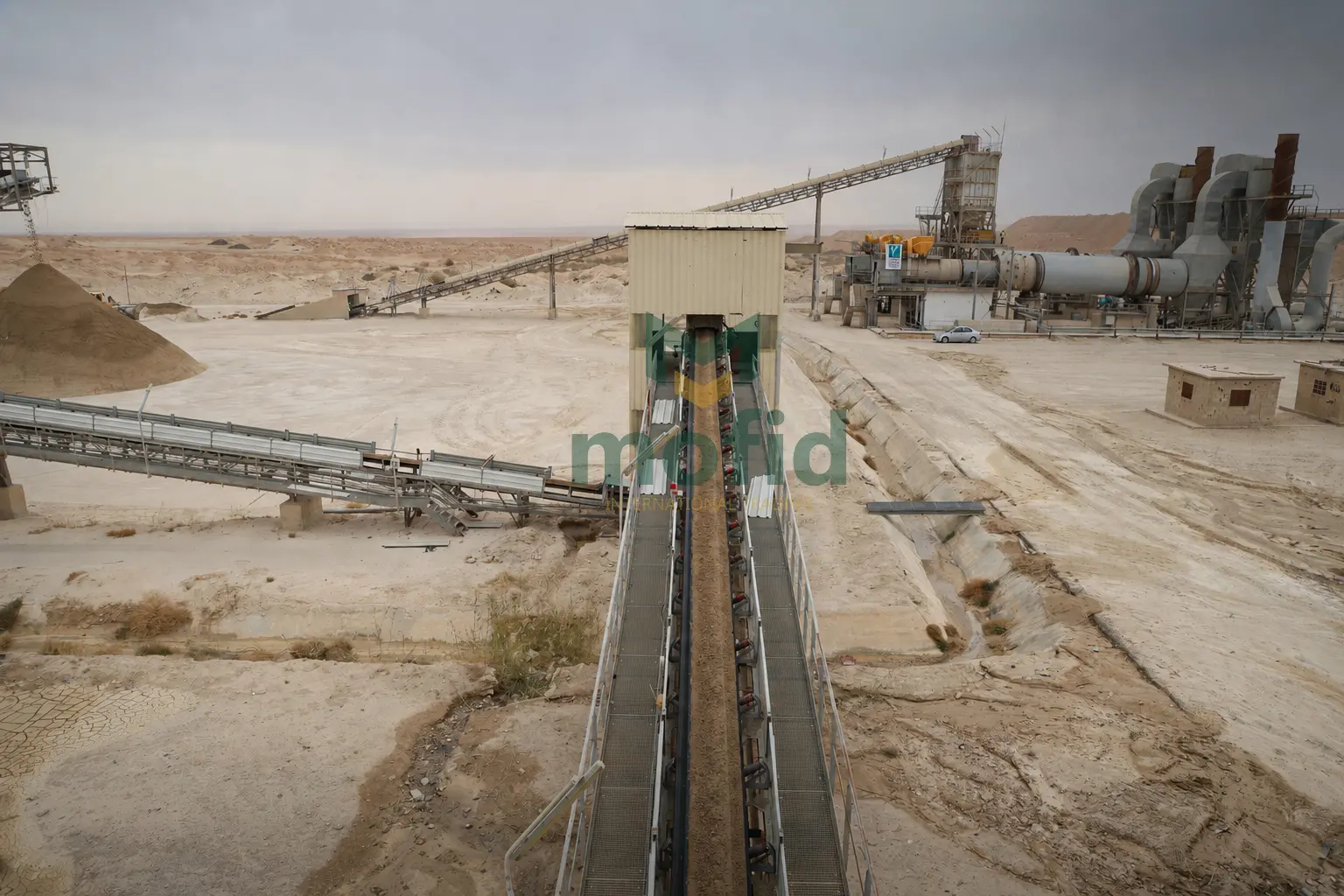
We maintain direct access to key producers in Jordan, Egypt, Syria, and West Africa, enabling us to offer the right grade to match your exact requirements.
Flexible Supply Volumes
Whether you need small pilot-scale quantities or large industrial shipments, we offer full logistical capability to support your operations.
Customized Packaging Options
Available packaging includes bulk, jumbo bags, 50-kg bags, or fully customized options.
Reliable, Transparent, and Cost-Effective Delivery
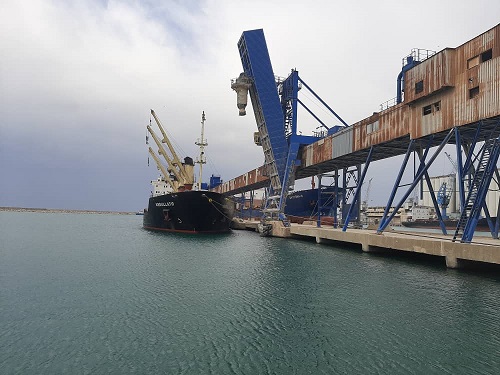
Through partnerships with reputable shipping and clearance providers, we ensure timely, secure, and transparent delivery to your destination.
Contact Us
For expert consultation, market analysis, or sourcing phosphate rock from multiple origins, feel free to reach out to Mofid Ltd anytime.