Introduction
Single Super Phosphate (SSP) is one of the first commercial mineral fertilizers that has been widely used in agriculture since the 1840s. By providing phosphorus, sulfur, and calcium, this fertilizer plays a key role in improving soil fertility and increasing crop yields. In this article, we will review the characteristics, production process, benefits, disadvantages, and applications of SSP, and provide comprehensive information by enhancing the strengths of existing resources and addressing their shortcomings.
Single Super Phosphate Production Process
Single superphosphate is produced by the chemical reaction of phosphate soil (mainly fluorapatite) with sulfuric acid. This reaction converts the insoluble phosphorus in phosphate soil into a soluble form (monocalcium phosphate) that is more suitable for absorption by plant roots. The chemical equation for this process is as follows:
2Ca₅(PO₄)₃F + 7H₂SO₄ + 3H₂O → 7CaSO₄ + 3Ca(H₂PO₄)₂·H₂O + 2HF
Production steps:
Extraction and grinding of phosphate rock: Phosphate rock extracted from mines (such as the Negev mines in Israel or other areas) is converted into a fine powder to increase its reactivity.
Reaction with sulfuric acid: Phosphate rock powder is mixed with sulfuric acid to produce monocalcium phosphate and gypsum (CaSO₄).
Processing and granulation: The final product is dried, screened, and packaged as granules for easier use in the fields.
One of the environmental benefits of SSP is the absence of phosphogypsum waste, which is a problem in the production of fertilizers such as TSP (triple superphosphate).
Chemical composition and nutrients
Single superphosphate usually contains the following components:
Phosphorus (P₂O₅): 16-20% (80-95% water soluble)
Sulfur (S): 11-12% (as absorbable sulfate)
Calcium (Ca): 19-21%
Other elements: Trace amounts of zinc (Zn) and other micronutrients in some crops.
This composition makes SSP a suitable fertilizer for soils poor in phosphorus and sulfur, especially in pastures and alkaline soils.
Benefits of single superphosphate
Improves root growth: The phosphorus in SSP helps develop strong roots, which are essential for the absorption of water and nutrients.
Increases crop yield: The use of SSP in crops such as wheat, corn, soybeans, cotton and pastures increases crop yield and quality.
Multiple nutrient supply: In addition to phosphorus, SSP contains sulfur and calcium, which are very beneficial for soils poor in these elements.
Compatibility with different soils: SSP performs well in alkaline, calcareous and phosphorus-poor soils and can be used directly or in combination with other fertilizers (such as ammonium sulfate).
Environmental advantage: The lack of harmful wastes in the production process makes SSP a more sustainable option than some other phosphate fertilizers.
Cost-effective: Due to its lower phosphorus content than TSP, SSP is usually cheaper and is suitable for farmers looking for economical solutions.
Disadvantages and limitations
Lower phosphorus content: SSP has less phosphorus than TSP (with 40-46% P₂O₅), which may not be sufficient for some phosphorus-intensive crops.
Soil Acidification: Continuous use of SSP can lower soil pH. To overcome this problem, it is recommended to use lime to adjust soil pH.
Need for Frequent Application: Due to the low mobility of phosphorus in the soil, SSP must be applied regularly and as a base fertilizer.
Incompatibility with some fertilizers: SSP cannot be mixed with fertilizers containing urea or diammonium phosphate (DAP), which may create compositional limitations.
Practical Applications of SSP
Single superphosphate is used in fields, orchards and pastures in granular or powdered form. Application methods include:
Direct application: broadcast on the soil surface or place near the roots (in small holes in the root line).
Mixed application: mixed with other fertilizers (except urea and DAP) to create custom formulations.
Timing: Usually applied as a base fertilizer before planting or in the early stages of plant growth.
SSP is well suited for crops such as wheat, corn, soybeans, cotton, coffee, vegetables and pastures. Also, when composting with agricultural waste, SSP can help increase phosphorus availability and reduce nitrogen losses.
Practical advice for farmers
Application rate: For soil preparation before planting, 2.3 kg of SSP per 19 m2 is recommended. For annual application, 59-118 ml per 2 m2 is sufficient.
Avoid contact with leaves: If using granules, prevent them from sticking to the leaves and irrigate the soil after application.
Combination with humic acid: Research has shown that adding humic acid to SSP can improve phosphorus uptake and crop yield in calcareous soils.
Sustainability and Future Prospects
The use of SSP is a sustainable option for agriculture due to the absence of harmful waste and low cost. However, to improve its efficiency, further research is needed on combining SSP with phosphate-solubilizing microorganisms (PSF) and organic matter such as humic acid. These compounds can increase phosphorus availability and reduce environmental impacts.
Our Products
We provide Single Super Phosphate (SSP) in two primary granular grades from Egypt, specifically designed for high absorption and soil enrichment. Below are the key chemical and physical properties as per the International A.O.A.C. standard methods.
1. Granulated SSP 19% (G.S.S.P)
This grade is ideal for standard crop requirements with high water solubility.
-
Total P2O5: 19.0% Min.
-
Available P2O5 (Water & Citrate Soluble): 17.0% Min.
-
Water Soluble P2O5: 15.0% Min.
-
Physical properties: Grayish color powder/granules.
-
Granulometry: 1-4.8 mm (95% Min).
-
Hardness: 3 Kg/granule Min.
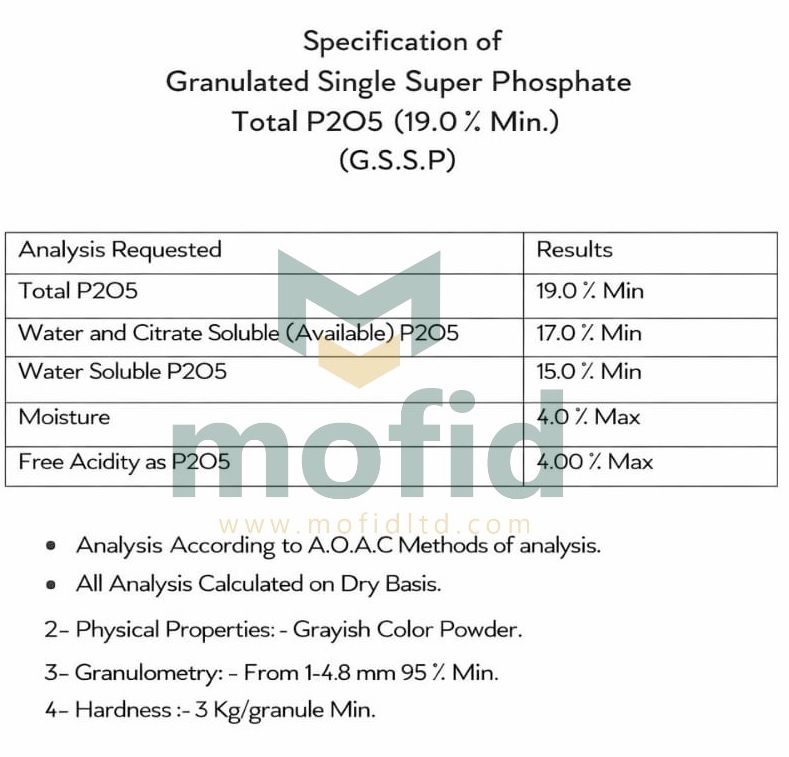
Table 1: Granular Single Super Phosphate Specs %19
2. Granulated SSP 20% (G.S.S.P)
A premium grade with an enhanced nutrient profile, including essential secondary elements.
-
Total Phosphorus (P2O5): 20% Min.
-
Soluble in 2% Citric Acid: 19% Min.
-
Essential Minerals: Calcium (18% Min) and Sulphur (10% Min).
-
Physical appearance: Grey Granules.
-
Size Analysis: 2-5 mm (80% Min).
-
Moisture Content: 8% Max (Dry basis).
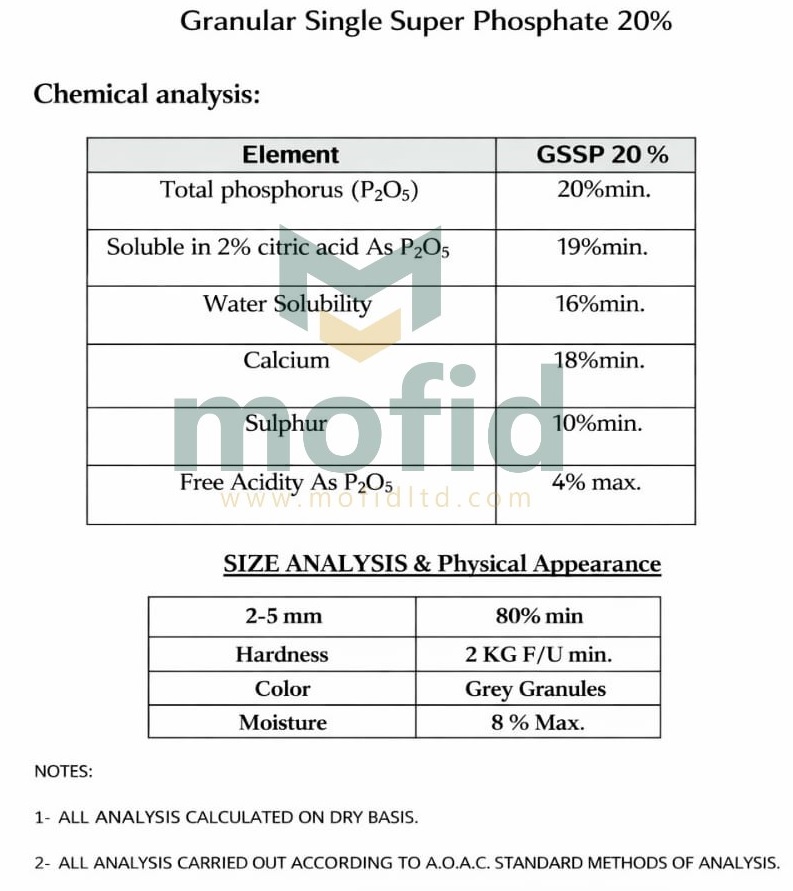
Table 2: Granular Single Super Phosphate Specs %20
Discover our diverse product portfolio:
Raw Materials:
Understanding the critical importance of quality in raw materials, Mofid International Trading Company specializes in providing products with high standards. Our goal is to improve production processes and increase customer productivity by providing raw materials that guarantee the quality of their output product.
Agricultural Fertilizers:
By using chemical fertilizers with precise and scientific formulations, we help in optimal growth and increase the yield of agricultural products. These fertilizers are designed to improve plant nutrition and are an effective step towards sustainable agriculture.
Main uses of Phosphate Rock:
Production of high-value phosphate fertilizers in agriculture
Production of industrial phosphoric acid
Use in livestock and poultry feed
Use in some chemical and detergent industries
Manufacture of specialized products such as anti-corrosion materials and LFP batteries
Benefits of buying imported phosphate soil:
High purity and accurate analysis
Absence of harmful heavy metals
Can be used in various production lines
Available in bulk, jumbo and bag packaging
We import this product directly and without intermediaries from the most reliable foreign sources and provide it to our customers at a competitive price, along with expert advice and quality assurance.
To inquire about the current price of SSP simple superphosphate and receive technical analysis, contact us now.
Frequently Asked Questions (FAQ)
-
What grades of SSP do you offer?
We provide two main grades: 19% and 20% P2O5. You can find the detailed chemical analysis for both products on this page.
-
What are the packaging and shipping options?
Our products are available in 50kg bags, Jumbo bags (1.6 MT), and Bulk in containers.
-
What is the Minimum Order Quantity (MOQ)?
Due to fixed logistics and handling costs, our minimum order quantity is 10 containers.
-
Do you accept bulk shipments (Vessel)?
Yes, for large-scale industrial needs, we can facilitate bulk shipments outside of containerized packaging.
-
How is the pricing calculated?
Our pricing is transparent and follows global market trends and reports. For example, in January 2026, according to Argus Media, the CFR Brazil benchmark for SSP 19% was approximately $230-$240/MT, while the 20% grade was priced at $260-$265/MT. Contact us for a real-time quote based on your destination.